
– Advertisement –
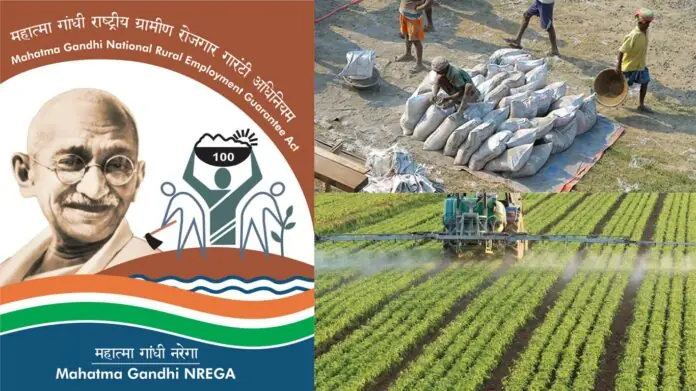
MGNREGA Under Threat: Centre to Replace Job Guarantee with New Bill, Shifts 40% Cost to States
The Centre is moving to introduce the “Viksit Bharat—Guarantee For Rozgar And Ajeevika Mission (Gramin)” Bill (VB-G-Ram-G) in the winter session, directly replacing the Mahatma Gandhi National Rural Employment Guarantee Act (MGNREGA). This isn’t just a rename; it’s a fundamental architectural shift that critics warn will kill the legal “right to work” in rural India.
Add rightsofemployees.com as a Preferred Source


Here’s the raw field report on the critical changes—and the massive cost being offloaded onto states:
Also Read | Flying with the Good Stuff? Domestic Liquor Limits & Rules Explained
The Headline Changes: More Days, More Cost
| Provision | MGNREGA (Old) | VB-G-Ram-G Bill (New) |
| Guaranteed Workdays | 100 days | 125 days (An increase) |
| Wage Funding | 100% by Centre (for unskilled wages) | 60% Centre / 40% State (for most states) |
| Funding Mechanism | Demand-Driven (open-ended budget based on demand) | Normative Allocation (fixed, determined by Centre) |
| Work Suspension | None | Allowed (States can pause work during peak agricultural seasons) |
| Control | Decentralized (Gram Sabhas & Panchayats) | Centralized (Centre decides allocations/areas) |
The Kicker: Shifting the Financial Burden
Under MGNREGA, the Centre bore the entire wage bill. The new Section 22 drastically changes this:
-
Most States: Will now have to pay 40% of the total expenditure incurred on the scheme.
-
The thing is: This massively increases the fiscal burden, potentially by tens of thousands of crores collectively. The legal entitlement now becomes contingent on the State’s ability to pay and the Centre’s fixed allocation.
Also Read | Flying with the Good Stuff? Domestic Liquor Limits & Rules Explained
The End of the “Right to Work”?
The new bill dismantles the demand-driven structure, which was the core strength of MGNREGA.
-
Central Control: Section 4(5) states the Centre will determine State-wise normative allocations. If demand exceeds the allocation, the state must pay the rest.
-
Sidelining Panchayats: The Centre also empowers itself to decide where the scheme will be implemented by notifying specific rural areas in a state.
-
“Labour Control”: The provision allowing the programme to be paused during peak agricultural seasons is highly controversial. Critics argue this is a move to push laborers toward private farms during sowing/harvesting, suppressing rural wages.
Activist Nikhil Dey, one of MGNREGA’s architects, condemned the move, calling it a “retreat from the rights-based framework” and “the end of the right to work in India.” He warned that the new legislation takes the country back to allocation-based schemes where the beneficiary has little say.
The government, for its part, argues the replacement is necessary due to “significant socio-economic transformation” in rural India and the need for a framework aligned with the “Viksit Bharat @2047” national vision…….
Also Read | Flying with the Good Stuff? Domestic Liquor Limits & Rules Explained
Disclaimer: This information is based on the draft “Viksit Bharat—Guarantee For Rozgar And Ajeevika Mission (Gramin)” Bill, 2025, circulated on December 15, 2025, and reports on the proposed changes.
Add rightsofemployees.com as a Preferred Source
– Advertisement –
#Bill #Replace #MGNREGA #Shifts #Cost #States #WhoWiki.org
